
Environmental protection
Protecting the environment when we construct and operate an offshore wind farm is vitally important.
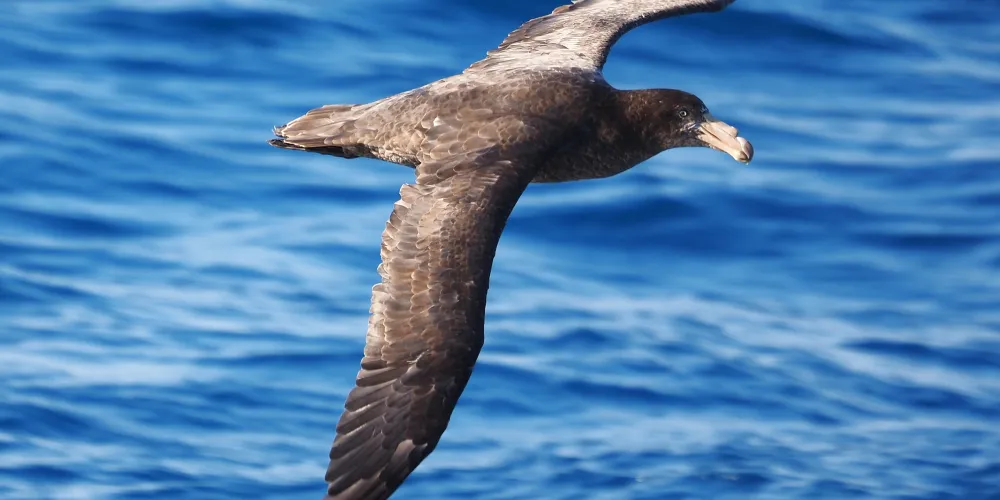
Blue Mackerel is carrying out comprehensive studies and impact assessments of the environment in our Feasibility licence area.
From July 2025, rolled out over a two-year period, we will study local shorebirds, seabirds, marine mammals, fish and fishing activity, cultural features, among other assessments. These studies will contribute to a broad and detailed assessment of potential impacts and measures to avoid and minimise impacts that will guide the windfarm design and ensure we meet stringent regulatory requirements.
Environmental Impact Statement
The Blue Mackerel Offshore Wind Project is being assessed under the Environment Protection and Biodiversity Conservation Act 1999 (EPBC Act) through the Environmental Impact Statement (EIS) process.
The Department of Climate Change, Energy, the Environment and Water (DCCEEW) released draft tailored assessment guidelines for the Blue Mackerel Offshore Wind Project in April 2026 and invited public comment. Submissions closed on 11 May 2026.
We thank community members and stakeholders who reviewed the draft guidelines and provided submissions. Following consideration of the submissions received, DCCEEW issued the final tailored assessment guidelines on 9 June 2026.
The environmental assessment function is now undertaken by the National Environmental Protection Agency, which commenced on 1 July 2026.
The final tailored assessment guidelines set out the matters that must be addressed in the Environmental Impact Statement (EIS) and will guide the project’s assessment under the Environment Protection and Biodiversity Conservation Act 1999 (EPBC Act). You can view the guidelines here.
Environment Report
In July 2026, the Victorian Minister for Planning confirmed that the Victorian components of the project will be assessed under the Environment Effects Act 1978 through a targeted Environment Report.
The Environment Report will focus on assessing potential impacts on biodiversity. It will be prepared in consultation with the Victorian Department of Transport and Planning and Department of Environment, Energy and Climate Action and to the satisfaction of the Minister for Planning.
Potential impacts on other environmental matters of state interest will be assessed through existing Victorian statutory assessment and approval processes.
Our environmental assessments:
Onshore
Focused primarily on the construction activity for the buried electricity cable, assessments will include:
• Ecology: Understanding potential impacts to native vegetation and terrestrial wildlife from the construction and operation of onshore infrastructure.
• Cultural heritage: Assessing and avoiding, in collaboration with GLaWAC, potential impacts to Aboriginal and historic cultural heritage places on land, including scarred trees, artefacts and known heritage sites.
• Soil and waste: Identifying and assessing risks from existing contaminated land and potential acid sulfate soils in onshore areas and waterways and how these would be managed during construction.
• Public amenity (noise, air quality and traffic): Assessing potential changes to public amenity, including construction-related noise, dust and traffic impacts on local residents and communities. As the construction and maintenance activities are primarily marine based, this assessment is focused around the buried electricity export cables.
• Waterways, flooding and groundwater: Assessing impacts to surface water, floodplains and groundwater during onshore construction of buried electricity export cables. This includes erosion risks, sedimentation, and changes to water flow.
Onshore and offshore
• Seascape, landscape and visual impacts: Assessing potential visual impacts of offshore infrastructure, including turbines and substations, on key viewpoints, coastal communities and tourist sites.
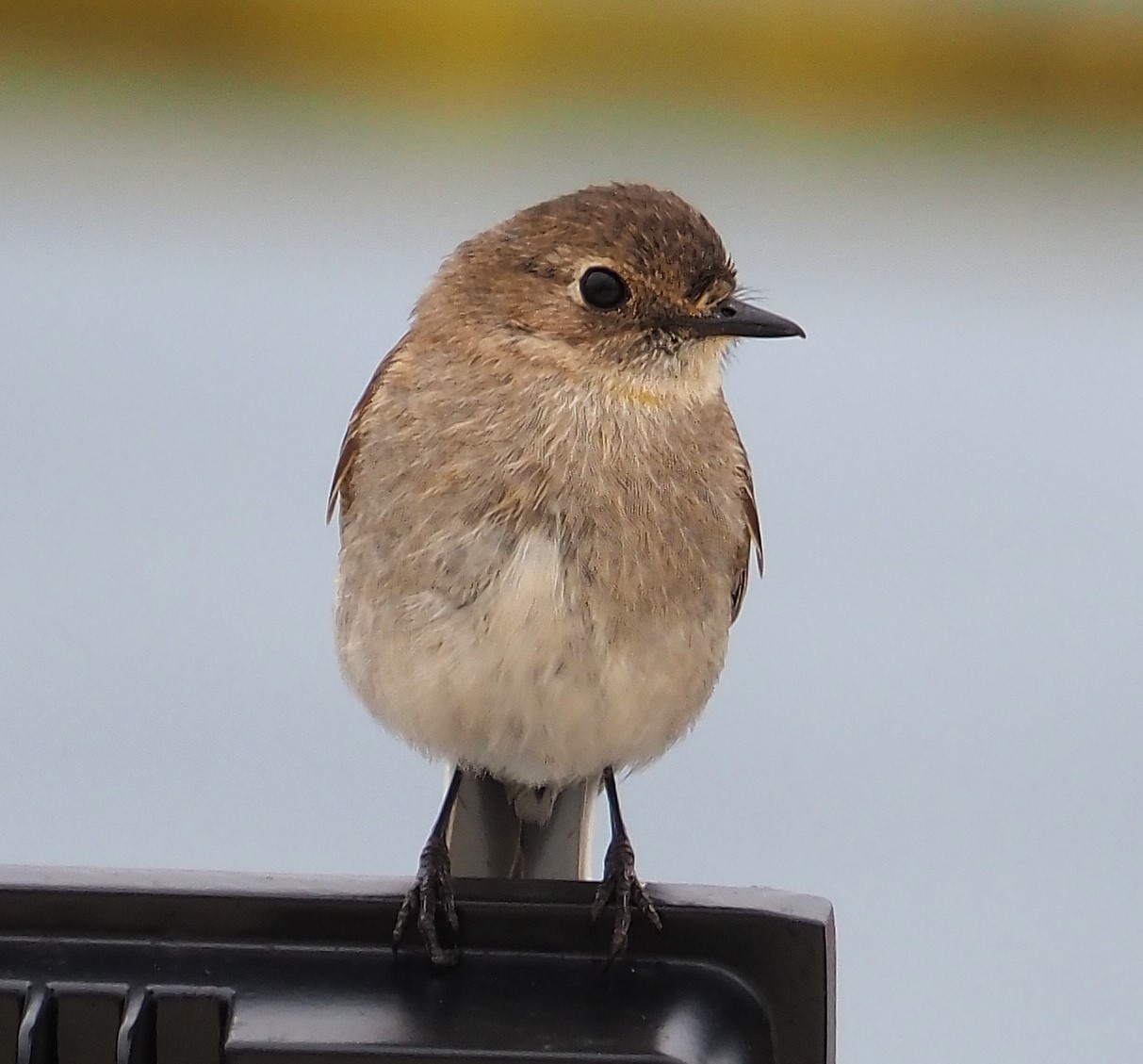
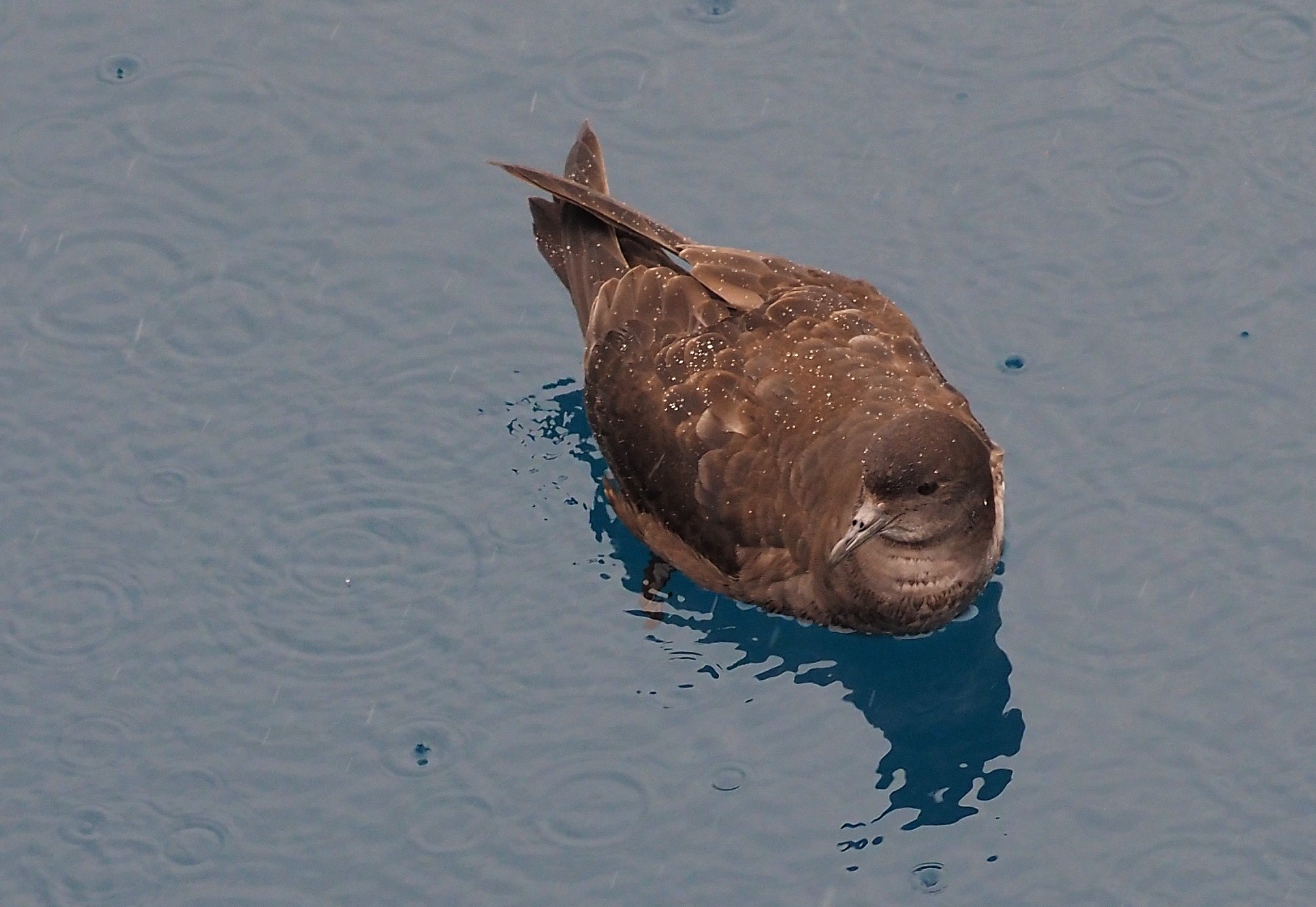
• Seabirds and shorebirds: Undertaking boat-based and camera surveys to understand bird presence, flight heights, behaviour and habitats. Collision risk modelling will be used to assess potential interactions with turbines and enable optimal distance of the bottom tip of the turbine blade from the ocean surface to maintain a clear area for flight paths.
• Aviation: Assessing if there could be any impacts of offshore turbines and infrastructure on aviation safety, including airspace use and visibility.
• Coastal processes: Assessing if offshore infrastructure could affect wave patterns, current flow and sediment transport along the coast and seabed.
• Greenhouse gas emissions: Assessing potential impacts on greenhouse gas emissions, including emissions from construction activity through to contributions to reduced emissions through renewable energy generation.
Offshore
Focused on the construction, operation and decommissioning of the offshore turbines and cables:
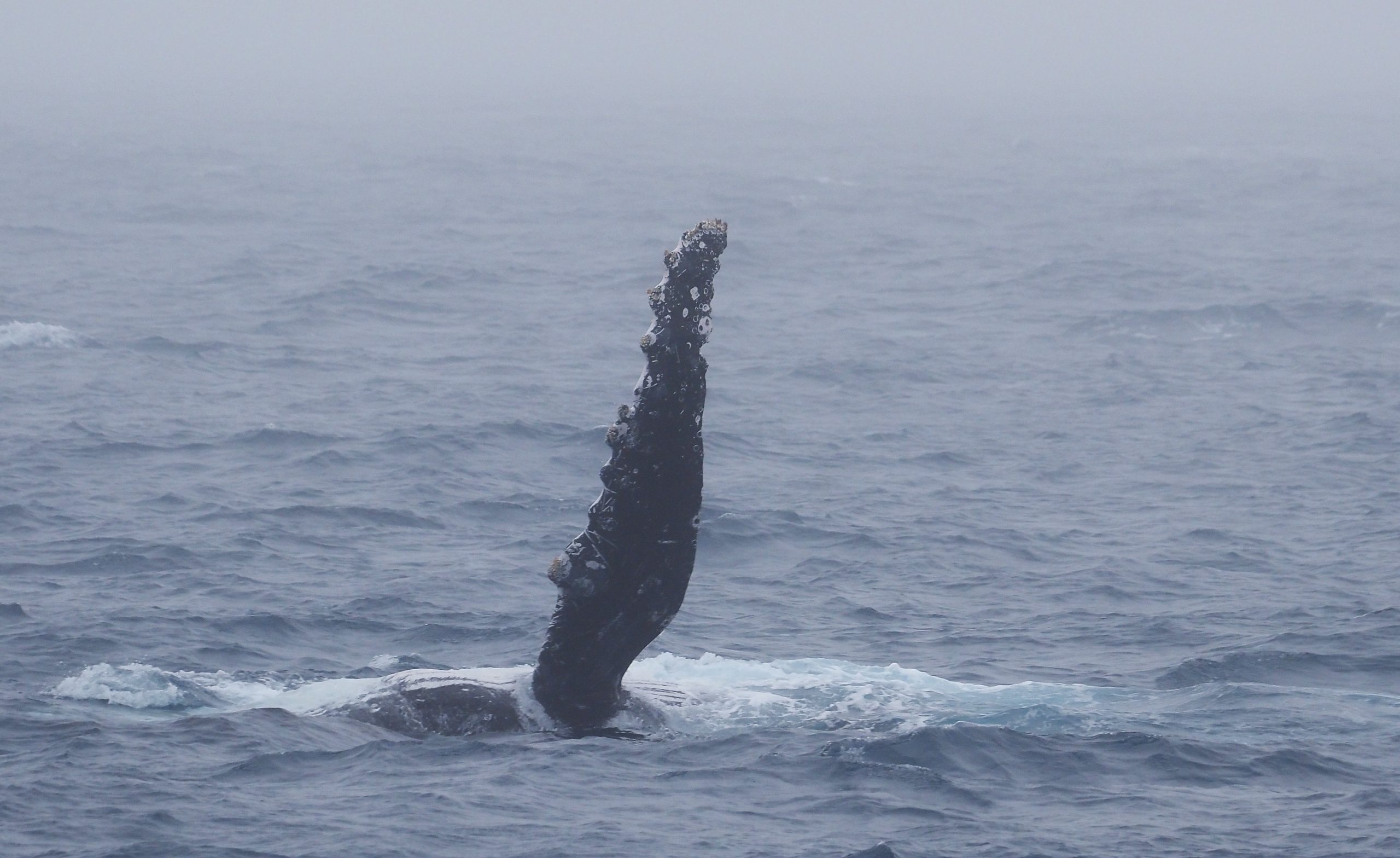
- Marine mammals: Assessing and identifying ways to avoid, minimise and manage potential impacts on marine mammals during construction, operation and decommissioning. Modelling underwater noise from project activities to understand potential impacts on marine mammals and other species.
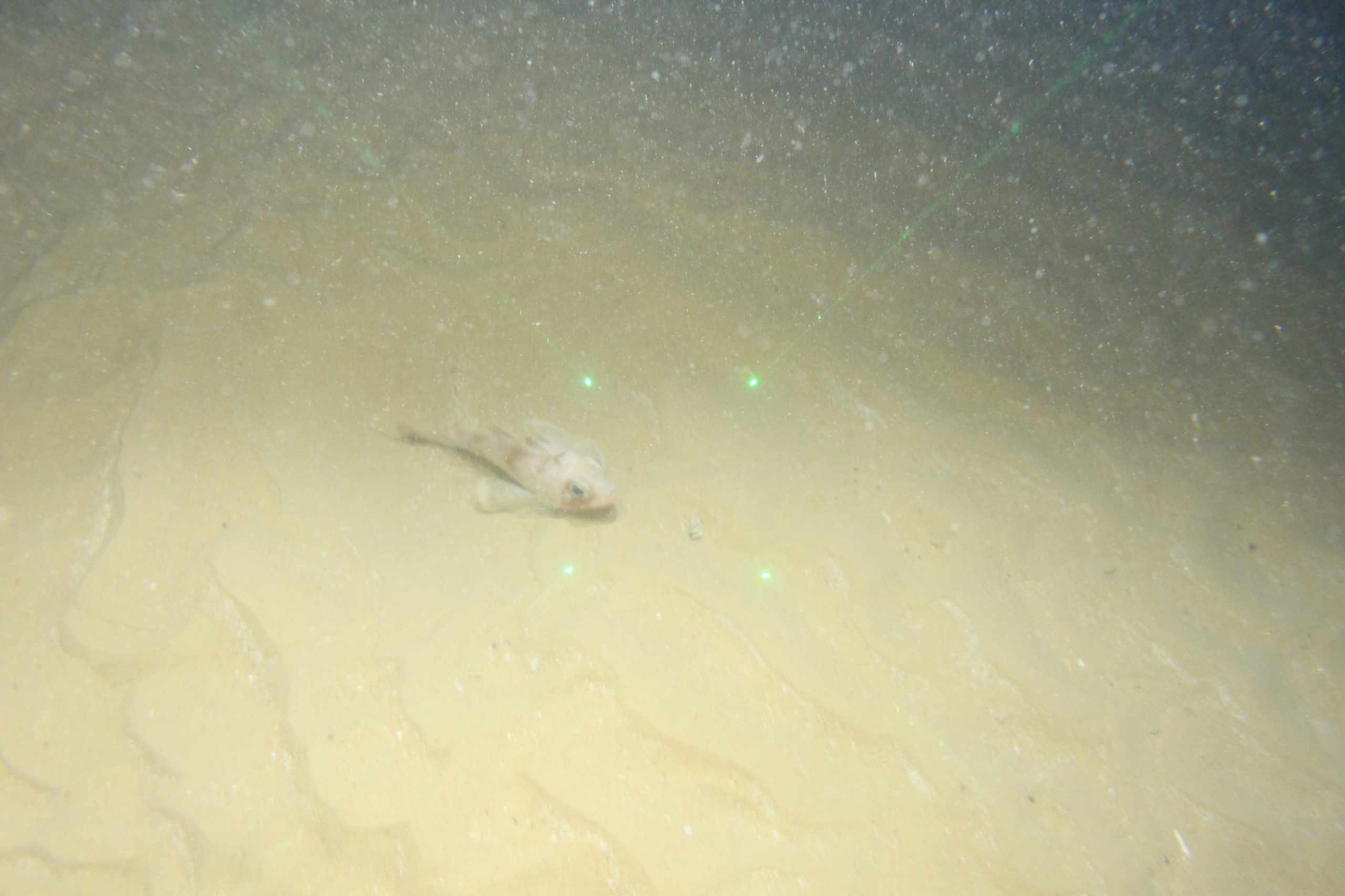
- Fish and sharks: Understanding potential impacts and benefits for fish, sharks and marine invertebrates from offshore construction, operation and decommissioning activities.
- Seafloor and intertidal habitats: Assessing and identifying ways to avoid and minimise potential impacts on benthic (seabed, sediments, and ocean bottom organisms) environments and marine ecology.
- Electromagnetic fields: Modelling and assessing whether electromagnetic fields from underwater electrical cables are likely to have potential impacts on marine species such as fish and sharks.
- Submerged cultural heritage: Conducting submerged landscape assessments with guidance from GLaWAC, marine archaeologists and underwater cultural heritage specialists to identify and avoid potential impacts on underwater cultural heritage sites.
- Commercial and recreational fishing: Understanding the potential impacts and benefits to commercial and recreational fishers during construction, operation and decommissioning of the offshore wind project.
- Shipping and navigation: Investigating how project vessels and infrastructure may interact with existing shipping routes and navigation. This includes identifying potential hazards and opportunities to support safe co-existence.
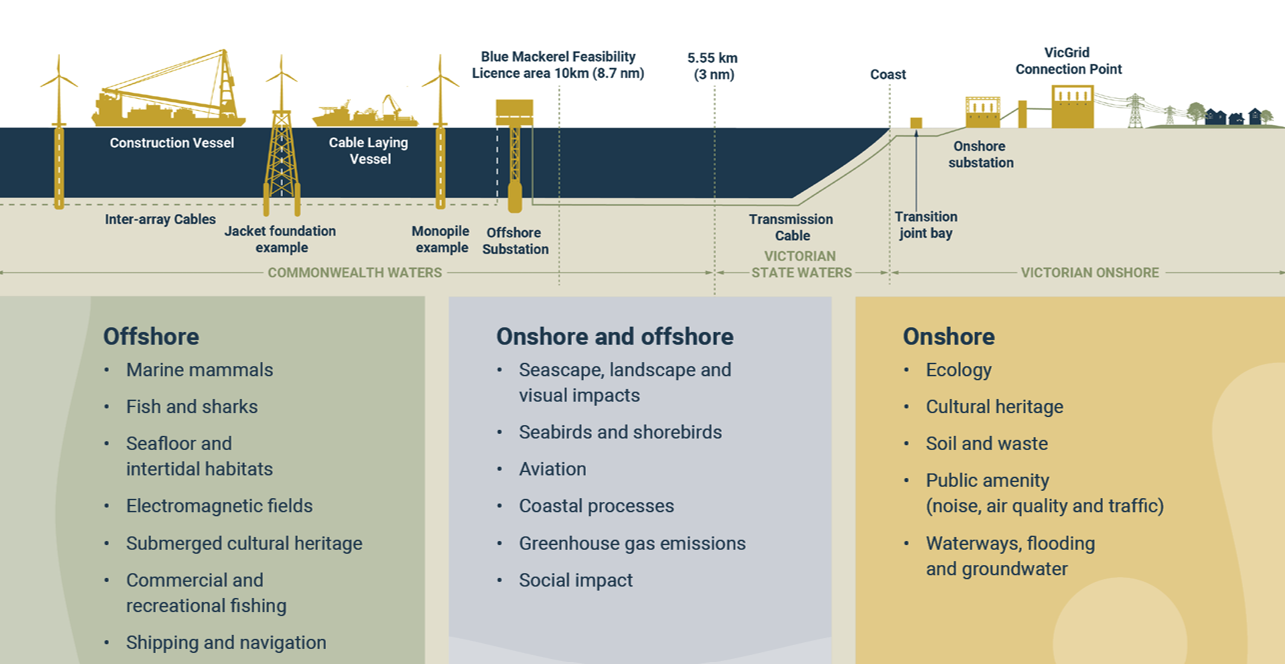
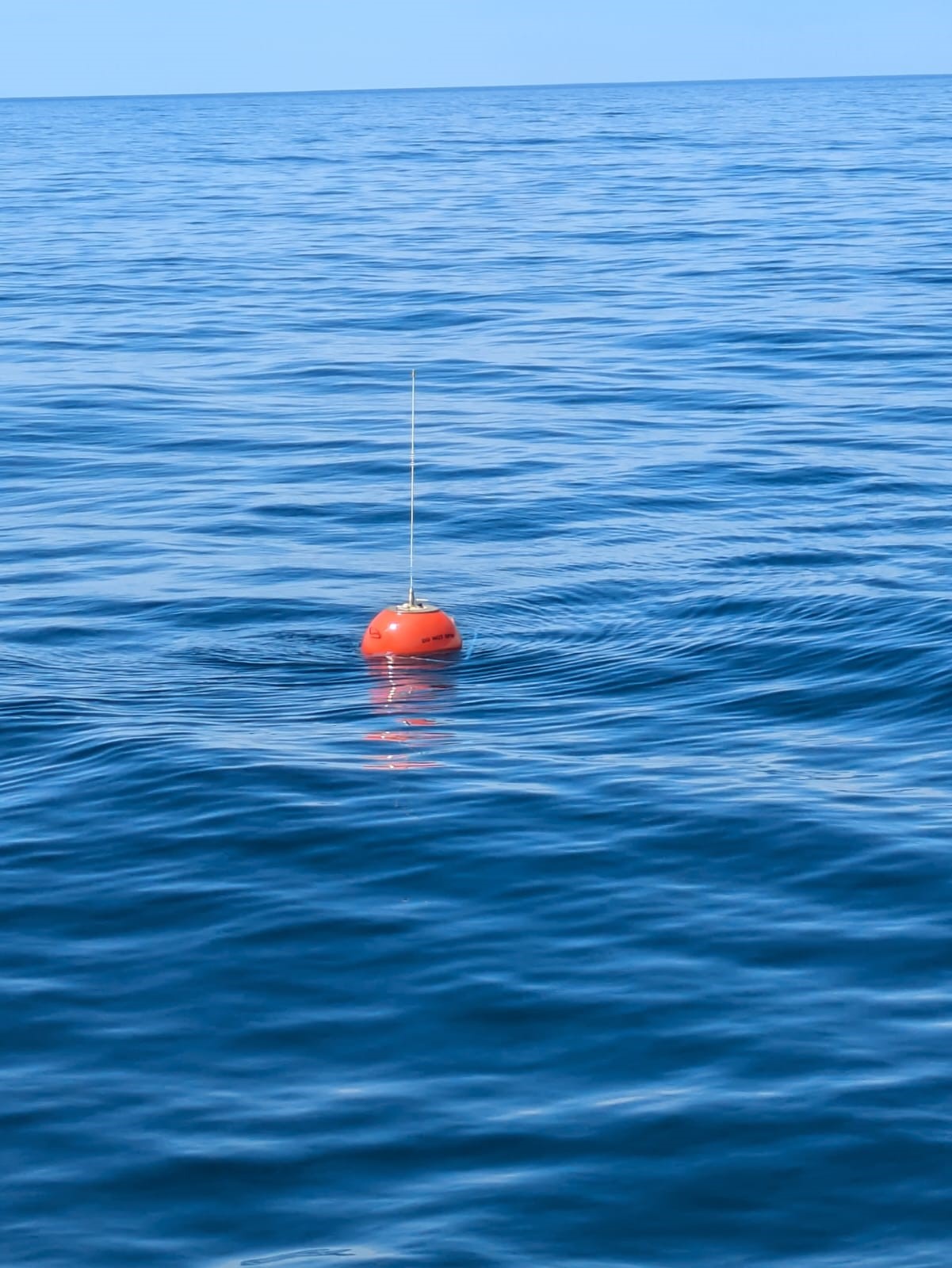
See map for deployed equipment locations:
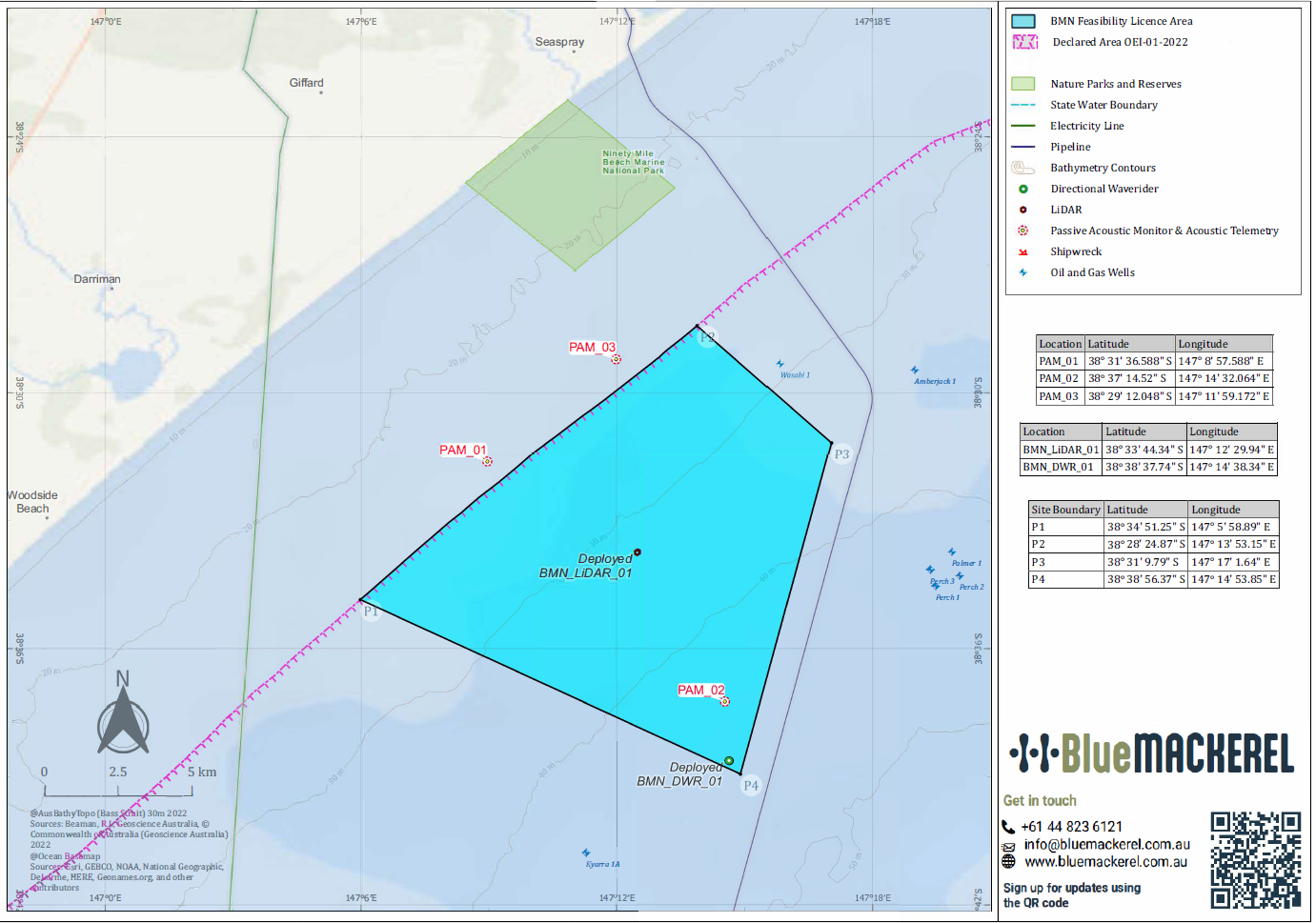
For a more detailed description of what each assessment will involve, please download our fact sheet below.
Environmental Protection - Fact sheet
Environmental protection – July 2025
Environmental referrals
Blue Mackerel referred its offshore wind project to regulators for decisions on the
assessment processes required under both:
- Commonwealth Environment Protection and Biodiversity Conservation Act 1999 (EPBC Act)
- Victorian Environment Effects Act 1978 (EE Act)
These referrals outlined the proposed project activities and supported regulators in
determining the required assessment and approvals pathway.
Why were there two referrals?
Different parts of the project are located in different jurisdictions and are assessed under different legislation:
- EPBC Act (Commonwealth): the offshore licence area is in Commonwealth waters. Matters of national environmental significance in the Victorian waters and onshore areas are also covered by this Act. You can view our referral documents here.
- EE Act (Victoria): export electricity cables and onshore connection infrastructure are in Victorian jurisdiction. You can find the documents here.
How will we share our findings?
Once complete, the environmental studies and impact assessments that make up the draft EIS will be released for public review and comment as part of the formal Environment Protection and Biodiversity Conservation Act 1999 assessment process. The draft EIS will be published for public comment for at least 20 business days.
After the public comment period closes, we will update the EIS to explain to the National Environmental Protection Agency the comments received and the actions taken to address them.
The draft EIS and the updated documentation will together form the final EIS. The final EIS will be used by the National Environmental Protection Agency in its assessment of the project and will inform the decision of the Commonwealth Minister for the Environment and Water, or their delegate.